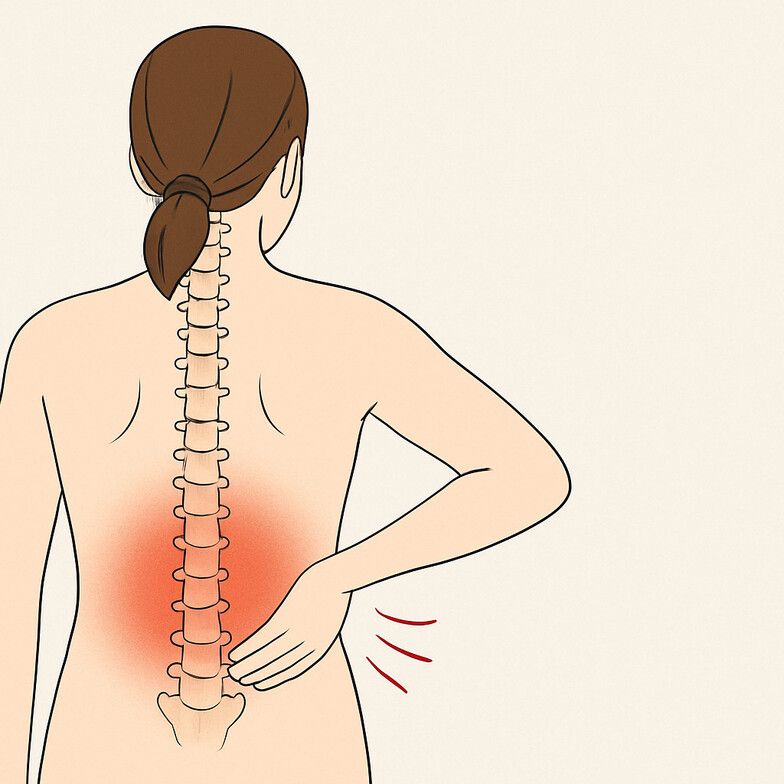
Walking your dog can flare low back pain because leash tension often pulls your torso into rotation and side-bending while your legs keep moving forward. That mismatch loads the lumbar joints, discs, and supporting muscles—especially if your dog pulls, you look down frequently, or you walk at an uneven pace. The fix is usually a combination of leash-side changes, posture cues, and a few simple strength and mobility drills.
Walking your dog feels like “light activity,” but it’s a surprisingly common trigger for low back flare-ups—especially when your dog pulls, stops abruptly, or zig-zags. The reason isn’t that walking is bad; it’s that dog-walking often turns normal gait into a repeated twist + side-bend + brace pattern. Over time (or sometimes in one bad moment), that pattern can overload lumbar joints, irritate a disc, or set off protective muscle spasm. If you want the diagnosis-driven overview of low back pain patterns and when imaging or a deeper exam is appropriate, start here: Low Back Pain evaluation and treatment
Why dog walking loads the low back more than normal walking
Normal walking is rhythmic and symmetrical: arms swing, pelvis rotates smoothly, and your trunk stays relatively centered. Dog walking often breaks that symmetry in three predictable ways:
1) Leash tension creates trunk rotation.
When the leash arm is pulled forward and slightly across your body, your ribcage rotates while your pelvis keeps moving forward. That repeated “counter-rotation” is a classic setup for low back irritation—especially if you already have stiffness in the mid-back or hips.
2) Side-bending happens without you noticing.
If your dog walks on one side and you keep the leash short, your shoulder hikes and your torso leans subtly. That lateral shift loads one side of the lumbar spine and can trigger one-sided tightness or a “catch” when you stand up later.
3) Abrupt stops and pulls spike load.
A sudden tug is basically a quick “traction + twist” event. Your core braces, your back muscles clamp down, and the lumbar joints/disc take an impulsive load. That’s why some people feel fine during the walk and then stiffen up an hour later.
The 3 most common symptom patterns (and what they often mean mechanically)
You don’t need to self-diagnose—pattern recognition just helps you choose the right next step.
Pattern A: Central low back stiffness or spasm after the walk
Often driven by repeated rotation/side-bending, fatigue of stabilizers, or guarding after a tug.
Pattern B: Low back pain that “spills” into the hip/glute or down the leg
Sometimes the back is still the primary driver, but your hip and leg are compensating—or the irritation is referring into the lower extremity. If your symptoms include buttock, thigh, calf, or foot sensations (pain, tingling, numbness, heaviness), use this hub for the clinically structured breakdown: Hip & Leg Pain.
Pattern C: Low back pain plus shoulder/arm tightness on the leash side
This is very common: a leash-side shoulder hikes, your upper back stiffens, and your neck/shoulder region takes extra load while your trunk rotates. If you notice shoulder, upper back, elbow, or forearm symptoms (especially on the leash arm side), this hub is the right “big picture” page: Shoulder & Arm Pain.
Quick self-check: are you doing the “dog-walk twist”?
During your next walk, notice these cues:
-
Is your leash hand pinned in front of your body instead of letting your arm swing?
-
Are your shoulders level, or is the leash-side shoulder higher?
-
Are you looking down frequently (phone, dog, ground), rounding the upper back?
-
Do you feel like your hips are walking forward but your chest is turned?
If the answer is “yes” to any of those, your low back is likely absorbing the mismatch.
Practical fixes that reduce stress immediately
These are simple, mechanical changes—no gimmicks, just load management.
Switch leash sides (or alternate every 5–10 minutes).
If your dog is always on the same side, your spine gets the same stress pattern every walk.
Use a longer leash and keep your hand near your hip—not across your body.
The goal is to reduce cross-body torque. Your arm should swing as normally as possible.
Cue: “Ribs stacked over pelvis.”
If your ribcage drifts forward or rotates, your low back compensates. Keep your chest centered over your belt line.
Slow down on corners and stops.
Most “tugs” happen when you change direction. Turn your whole body (feet + hips) instead of twisting at the waist.
Consider equipment that reduces pulling.
A front-clip harness (not a tight, jerking collar approach) can reduce the sudden rotation load from repeated pulls.
Two drills that help the pattern (2–4 minutes total)
These are general, low-risk options that fit the “dog-walk” mechanism. Stop if symptoms worsen.
1) Standing hip hinge drill (1 minute)
Hands on hips, soften knees, push hips back with a neutral spine. This reinforces using hips instead of lumbar bending when you brace or change direction.
2) Suitcase carry (light) or “anti-lean” hold (1 minute each side)
Hold a light weight on one side (or a grocery bag) and stand tall without leaning. This targets lateral stability—useful if leash-side leaning is part of your pattern.
When it’s worth getting evaluated (and what a clinician is looking for)
If your pain keeps returning with dog walks, the goal isn’t endless rest—it’s identifying the driver: mobility restriction (hips/thoracic spine), lumbar joint irritation, disc sensitivity, or a leg-dominant pattern. A proper exam typically looks at motion tolerance, neurologic screens when indicated, and orthopedic testing to determine whether your symptoms are primarily low-back, hip/leg, or shoulder/arm driven—then builds a plan around that finding (not around a generic modality list).
If your pain is recurring or changing (new leg symptoms, progressive weakness, worsening night pain, or loss of bowel/bladder control), skip guesswork and start with the right hub:
-
Low Back Pain: https://woodroofchiro.com/what-we-treat/pages/low-back-pain
-
Hip & Leg Pain: https://woodroofchiro.com/what-we-treat/pages/hip-leg-pain
-
Shoulder & Arm Pain: https://woodroofchiro.com/what-we-treat/pages/shoulder-arm-pain
Bottom line: Dog walking doesn’t “cause” low back pain out of nowhere—it commonly reveals a mechanical tolerance problem by adding rotation, side-bending, and sudden pulling to your gait. Fix the leash mechanics, restore symmetry, and get a diagnosis-driven exam if it keeps coming back.
FAQs
FAQ 1: Why does my back hurt after walking my dog but not after regular walking?
Dog walking often adds leash-pull rotation, side-bending, and abrupt stops—so your spine is dealing with uneven forces instead of a symmetrical gait.
FAQ 2: Can walking a pulling dog irritate a disc?
It can aggravate disc-sensitive backs because pulling and twisting can spike load. If symptoms include leg pain, tingling, or numbness, use the Hip & Leg Pain hub and consider an evaluation.
FAQ 3: Why do I feel pain on one side of my low back when I hold the leash?
A leash on one side often hikes the shoulder and shifts your trunk slightly, loading one side of the lumbar spine repeatedly.
FAQ 4: What’s the best leash side if I have low back pain?
Alternating sides is usually best. If one side consistently triggers symptoms, that’s a useful clinical clue during an exam.
FAQ 5: Should I stop walking if it flares my low back?
Not necessarily. Modify the mechanics (reduce pulling, alternate sides, posture cues) and shorten duration temporarily. Persistent or worsening symptoms should be evaluated.
FAQ 6: Why does my shoulder or arm get tight when my low back flares on walks?
Leash-side shoulder tension and upper-back stiffness can couple with trunk rotation, feeding into a whole-chain compensation pattern. The Shoulder & Arm Pain hub covers that pathway.
Ike Woodroof
Contact Me