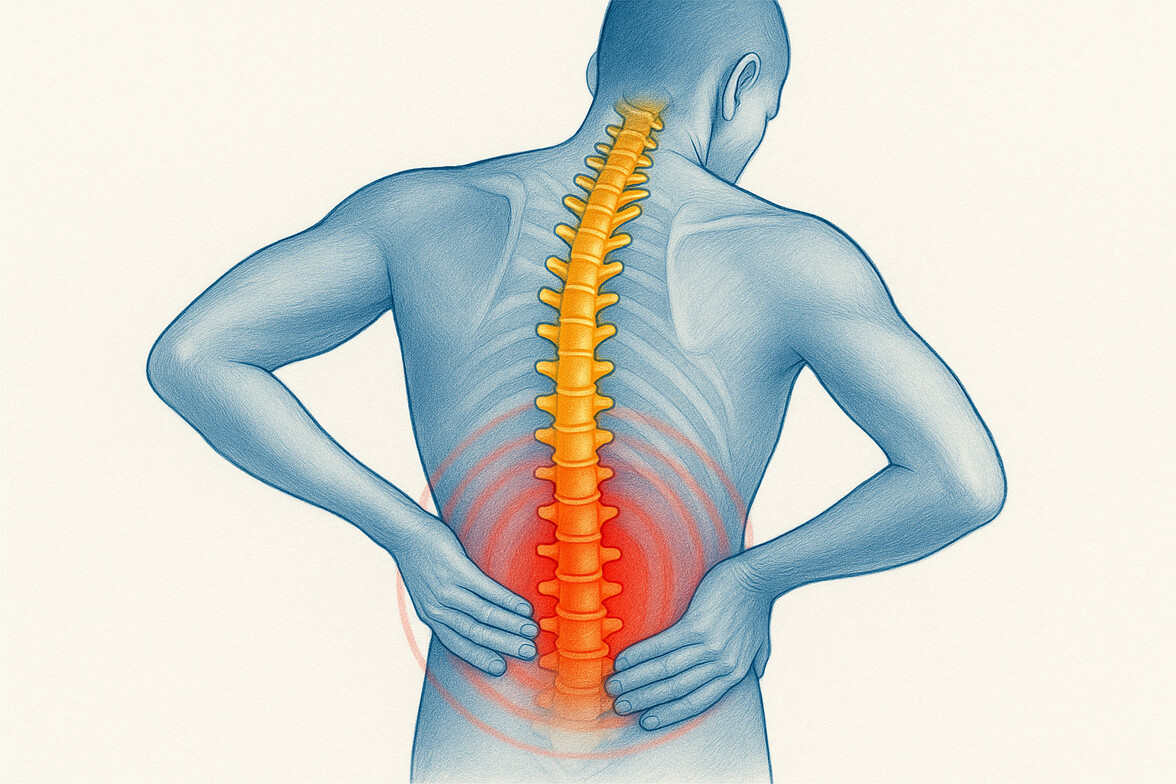
Being a restaurant server commonly causes back pain because the job stacks repeated twisting, forward reaching, and one-sided carrying on top of long hours standing on hard floors. That combination fatigues your stabilizers and increases stress on the low back, upper back, and neck—sometimes triggering sciatica-like symptoms if the lumbar region becomes irritated. The most effective next steps usually involve improving carrying mechanics, reducing repeated trunk rotation, restoring mobility, and getting evaluated when symptoms persist or radiate.
If you’re a restaurant server, you already know the pattern: you feel fine at the start of a shift, then your back starts tightening, and by the end you’re stiff, sore, or getting sharp “catch” pain with bending, twisting, or standing up straight. That’s not “just getting older” or “just being on your feet.” Serving creates a very specific mechanical load: repeated rotation + forward reach + one-sided carrying + long standing on hard floors. Over time, that combination can irritate the low back, tighten the upper back, and overload the neck.
If your symptoms are mainly centered in the lumbar area (or you get pain with standing up from sitting, bending forward, or after long shifts), start with the diagnosis-driven overview here: Low Back Pain. If you notice symptoms traveling into the leg (buttock/thigh/calf/foot), use the sciatica hub: Sciatica. If your main issue is between the shoulder blades or mid-back fatigue/burning, see: Upper Back Pain. And if the shift leaves you with neck stiffness, headaches, or upper-trap tightness, use: Neck Pain.
Why serving overloads your back: the 5 mechanics most servers repeat all shift
1) Repeated trunk rotation (“twist and reach”)
Servers rarely move straight forward/back. You pivot around tables, twist to set plates down, rotate to grab items from side stations, and turn quickly in tight spaces. Rotation by itself isn’t “bad,” but thousands of reps under time pressure turns into a fatigue problem—your low back often becomes the “hinge” when the hips and upper back stop contributing.
2) Forward reach with a rounded upper back
Reaching across a table encourages upper-back rounding and shoulder protraction. When the upper back stiffens, the neck and low back compensate—commonly leading to upper back tightness and neck stiffness late in the shift.
3) One-sided carrying (tray, tub, plates, apron load)
Carrying a tray on one side or constantly holding weight in one hand creates a subtle side-bend and brace pattern. That can overload one side of the lumbar spine and irritate the muscles around the pelvis and ribs. Many servers describe pain that’s “one-sided” or a nagging ache near the belt line after a long weekend.
4) Standing/walking on hard floors (fatigue + compression)
Long hours on hard surfaces increases overall fatigue and reduces shock absorption. When your legs and hips are tired, your spine absorbs more load—especially with sudden stops, quick turns, and carrying.
5) End-range bending to clear/stack/reset
Resetting tables, loading dish bins, stocking, and bus-tub work is often repetitive bending with speed. If you combine that with rotation (bend + twist), it’s a classic flare trigger for low back sensitivity.
The 4 symptom patterns we see most in servers (and what they usually indicate mechanically)
Pattern A: Central low back stiffness or “catch” pain
Often driven by accumulated fatigue from rotation and repeated bending. People feel it when they stand up from sitting after the shift or when they roll over in bed.
Pattern B: One-sided low back pain near the belt line
Often linked to one-sided carrying or “always turning the same direction” around the same station layout.
Pattern C: Upper back burning/tightness between the shoulder blades
Usually from forward reach + rounded posture + shoulder girdle fatigue. This is where the Upper Back Pain hub is most useful for evaluation logic and next steps.
Pattern D: Pain that radiates into the hip/leg (sciatica-like)
Not all leg symptoms are the same, but if you’re getting buttock/thigh/calf/foot symptoms (pain, tingling, numbness, heaviness), it’s worth treating it as a distinct pattern that should be evaluated. Use the Sciatica hub here.
What to change right away (these reduce load without “fixing everything”)
Alternate carrying sides on purpose.
If you always carry on the same side, you train asymmetry. Swap sides when safe, or rotate tasks.
Use “feet first” turns instead of twisting at the waist.
When you turn around a table, step-turn rather than rotate the trunk while your pelvis stays forward.
Keep plates/trays closer to your center of mass.
The farther the load is from your body, the more torque your back has to manage.
Micro-break your posture.
Every few minutes, reset: ribs stacked over pelvis, shoulders down/back, gentle chin tuck (not aggressive).
Choose shoes/inserts that reduce fatigue.
This won’t “cure” a spine issue, but reducing leg fatigue reduces compensations up the chain.
Two simple drills for servers (2–4 minutes total)
These are general and low risk; stop if symptoms worsen.
1) Wall “reach-back” / scap set (60 seconds)
Back to a wall, elbows slightly back, gently retract the shoulder blades without shrugging. Helps counter the forward-reach posture that drives upper-back and neck fatigue.
2) Hip hinge rehearsal (60–90 seconds)
Hands on hips, soften knees, push hips back with a neutral spine. Reinforces using hips for bending rather than repetitive lumbar flexion under speed.
When you should get evaluated (and what the exam is trying to determine)
If you’re repeatedly flaring after shifts, the goal is to identify the driver: low-back joint irritation, disc sensitivity, hip mobility restriction, or a radiating pattern that behaves like sciatica. A structured evaluation looks at motion tolerance, neurologic screens when indicated, and orthopedic testing to decide whether your symptoms are primarily low back, upper back, neck, or sciatica-pattern—and then builds a plan around that finding.
Use the correct hub based on your symptom pattern:
-
Low Back Pain: https://woodroofchiro.com/what-we-treat/pages/low-back-pain
-
Upper Back Pain: https://woodroofchiro.com/upper-back-pain
-
Neck Pain: https://woodroofchiro.com/what-we-treat/pages/neck-pain
-
Sciatica: https://woodroofchiro.com/what-we-treat/pages/sciatica
FAQs
FAQ 1: Why does my back hurt more at the end of a serving shift?
Serving stacks rotation, forward reaching, and carrying on top of prolonged standing. As stabilizers fatigue, your spine absorbs more load—so symptoms often build through the shift.
FAQ 2: Is my pain more likely low back, upper back, or neck-related?
It depends on where symptoms concentrate and what movements trigger them. Low back pain often flares with bending/standing up; upper back tightness often correlates with forward reach; neck stiffness often follows prolonged shoulder elevation and head-forward posture.
FAQ 3: Why do servers get one-sided low back pain?
One-sided carrying and repeatedly turning the same direction around a station layout can create a consistent side-bend/rotation stress pattern.
FAQ 4: Can serving cause sciatica?
Serving can irritate the low back enough to create radiating symptoms into the hip/leg. If you have numbness, tingling, weakness, or symptoms below the knee, it’s worth being evaluated.
FAQ 5: What can I change immediately to reduce back strain at work?
Alternating carry sides, step-turning instead of twisting, keeping loads closer to your body, and doing quick posture resets can reduce cumulative stress.
FAQ 6: When should I stop self-treating and get evaluated?
If symptoms are recurring, worsening, lasting more than a couple weeks, or include radiating leg symptoms, progressive weakness, or bowel/bladder changes, get evaluated promptly.
Ike Woodroof
Contact Me