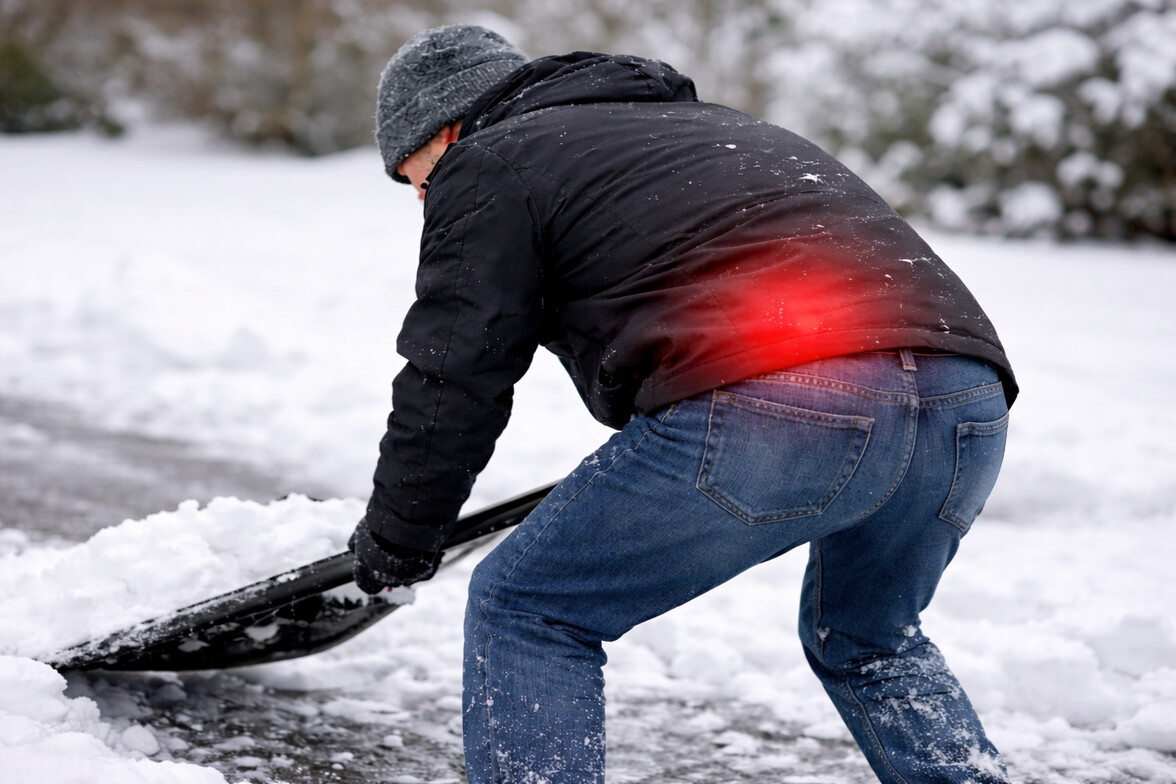
Snow shoveling is one of the most common winter triggers for low back pain I see as a chiropractor in Olathe, especially after heavy snowfall or icy conditions. Many people feel fine while they’re outside clearing the driveway, only to notice stiffness, aching, or sharp discomfort later that day or the next morning. If you already deal with neck stiffness, headaches, mid-back tension, or a history of low back trouble, shoveling can easily aggravate those areas. That’s why it’s important to understand how this activity stresses the spine and how it relates to broader conditions we treat, such as neck pain, migraines and headaches, upper back pain, and especially low back pain.
Featured snippet:
Snow shoveling stresses the low back because it combines forward bending, twisting, and lifting—often in cold temperatures when muscles and joints are less flexible. This repeated loading can irritate joints, discs, muscles, and surrounding nerves.
When you shovel snow, your spine is rarely in a neutral position. Most people bend forward at the waist, rotate to throw snow aside, and repeat that motion dozens—sometimes hundreds—of times. The weight of wet snow increases the load on the lumbar joints and discs, while twisting under load challenges the stabilizing muscles of the core and low back. Cold weather further reduces tissue elasticity, meaning the spine tolerates less stress before becoming irritated.
Patients often describe a wide range of symptoms after snow shoveling. Some notice a deep, dull ache across the lower back. Others feel stiffness that makes it hard to stand upright after sitting. Sharp pain with bending, soreness on one side of the spine, or discomfort that worsens with coughing or sneezing are also common. Some people feel symptoms travel into the hips or upper buttock region, while others notice tightness that builds throughout the day.
In the office, I frequently see clear patterns tied to movement and posture after snow removal. Pain often increases with forward bending or twisting but eases when lying down. Some patients tolerate standing better than sitting, while others feel worse first thing in the morning. It’s also common for snow shoveling to flare pre-existing spinal stress that overlaps with issues like chronic low back pain or mechanical strain higher up in the back or neck.
FAQs patients often ask:
Why does my back hurt the day after shoveling, not during it?
Inflammation and muscle guarding often develop hours after the activity, which is why symptoms can be delayed.
Is twisting while shoveling worse than lifting?
Yes—twisting under load places additional stress on spinal joints and discs compared to straight lifting.
Can snow shoveling cause pain that spreads into the hip or leg?
It can irritate structures in the low back that refer discomfort into nearby areas, even without a specific injury.
Should I stop moving if my back hurts after shoveling?
Gentle movement is usually better than complete rest, but activities that sharply increase pain should be avoided.
Does cold weather make back pain worse?
Cold temperatures can reduce muscle flexibility and joint motion, making the spine more vulnerable to strain.
If you’re dealing with low back pain after snow shoveling, you don’t have to just wait it out. We help patients every winter understand what’s driving their symptoms and how to restore healthier spinal movement.
If you’re dealing with low back pain after snow shoveling, we can help.
Call our Olathe chiropractic office at 913-735-6351,
or click “Schedule Your Visit” to get started.
Ike Woodroof
Contact Me