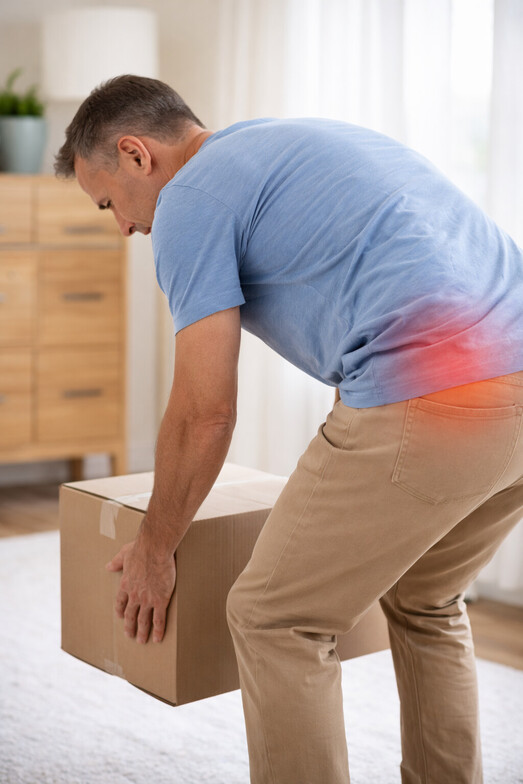
If you’re feeling pain that starts in your lower back and travels down your leg, you’re not alone. Many patients searching for a chiropractor in Olathe describe a deep ache, sharp shooting pain, or tingling that runs through the hip and into the leg. While this pattern is commonly associated with sciatica, it often begins with pressure in the lower spine. If you want a full explanation of causes and long-term management, visit our detailed guide on sciatica treatment in Olathe, where we outline the condition more comprehensively.
Featured Snippet Explanation:
Sciatic-type leg pain often occurs when structures in the lower spine place pressure or irritation on nerve roots that form the sciatic nerve. This pressure can come from disc changes, joint restriction, or mechanical loading patterns. Reducing spinal compression may help decrease nerve irritation and improve mobility.
Why does this happen? The lower spine absorbs significant mechanical load every day. Prolonged sitting, repetitive bending, heavy lifting, or sudden twisting can increase disc pressure. When spinal joints lose normal motion, surrounding muscles tighten and protective patterns develop. In some cases, disc bulges or inflammation contribute to nerve sensitivity. Over time, sustained compression can produce pain patterns that travel beyond the lower back and into the hip or leg. For a broader understanding of lumbar mechanics, you can review our page on low back pain in Olathe.
Common symptoms patients notice include:
-
Pain that radiates from the lower back into the buttock
-
Tingling or “pins and needles” in the leg
-
Numbness in the calf or foot
-
Sharp pain when standing up after sitting
-
Increased discomfort when bending forward
-
Difficulty walking long distances
-
Pain that worsens with prolonged driving
-
Relief when lying down or changing positions
-
Morning stiffness that improves with movement
-
Leg weakness that feels intermittent
In the office, I often see patterns where patients tolerate walking better than sitting, or vice versa. Some notice pain increases during prolonged desk work. Others report flare-ups after lifting or yard work. Many describe symptoms that intensify late in the day as spinal compression accumulates. These movement-based patterns help guide a conservative care approach.
One conservative option frequently used is spinal decompression therapy. Decompression involves gentle, controlled traction that aims to reduce pressure within lumbar discs. By decreasing compressive load, the spine may experience improved fluid exchange and reduced mechanical stress on nerve roots. This approach is often combined with chiropractic adjustments to restore motion to restricted joints. If disc involvement is suspected, our disc bulge page explains how disc pressure can influence nerve irritation.
FAQs
Is decompression therapy painful?
Most patients describe decompression as gentle and comfortable. The goal is gradual pressure reduction, not forceful stretching.
How long does it take to notice improvement?
Response varies depending on symptom duration, mechanical stress patterns, and overall spinal health. Many patients report gradual changes over several visits.
Can I exercise with sciatica symptoms?
Movement is often beneficial, but exercises should match your tolerance level. Aggressive stretching during flare-ups may increase irritation.
Is surgery the only option for leg pain?
Surgery is typically considered when conservative measures fail or when significant neurological deficits are present. Many cases respond to non-surgical care.
Why does sitting make my leg pain worse?
Sitting increases lumbar disc pressure, especially in flexed postures. Sustained compression may aggravate sensitive nerve roots.
If you’re dealing with leg pain that starts in your lower back, we can help. Call our Olathe chiropractic office at 913-735-6351 or click “Schedule Your Visit” to get started.
Ike Woodroof
Contact Me