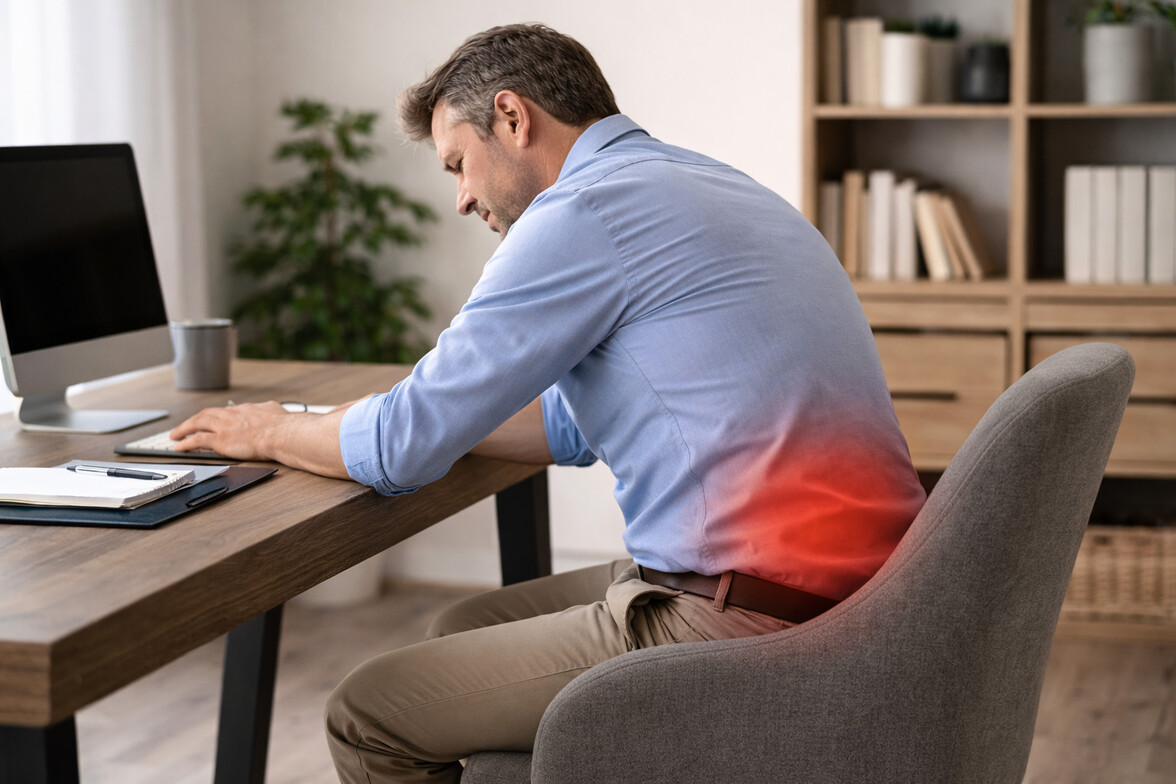
Low back pain that radiates into the hip, thigh, or leg is a common reason people seek care — but the underlying cause is not always the same. One possible source of this type of pain is a disc bulge at the L4–L5 spinal level that places pressure on nearby nerve tissue.
This article explains one common mechanical scenario we see involving the L4–L5 disc and radicular symptoms. A full discussion of low back pain, disc bulges, and sciatica — including diagnosis, evaluation, and treatment planning — is covered on the following pages:
Leg pain can be confusing, especially when it doesn’t seem to start in the leg at all. Many patients are surprised to learn that discomfort felt in the hip, thigh, or lower leg can originate from the lower spine. As a chiropractor in Olathe, I often see people who assume they have a muscle strain in the leg, only to later realize their symptoms are connected to how the lower back is moving and loading. While this article focuses on one specific scenario, it’s important to understand that leg symptoms can also overlap with issues related to the neck, headaches, upper back, and low back, which are covered in more detail on our condition pages for neck pain, migraines and headaches, upper back pain, and low back pain.
In some patients, changes at the L4–L5 spinal segment can place stress on nearby nerve tissue. When this happens, symptoms may be felt along the path of that nerve rather than only at the spine itself.
When the lower spine is working well, the joints, discs, and surrounding muscles share load evenly during sitting, standing, and movement. At the L4–L5 level, the disc sits between two vertebrae that handle a significant amount of bending and compression. Repeated sitting, poor posture, or sudden loading can increase stress on this disc. In some cases, that stress alters how the disc interacts with nearby nerves, which helps explain why discomfort may be felt in areas supplied by those nerves rather than directly over the low back.
Patients often describe this as a deep ache, tightness, or burning sensation that seems to “travel” from the low back into the hip, thigh, or even toward the lower leg. This pattern is commonly discussed in relation to sciatica and disc bulge mechanisms, which are explained in more depth on our dedicated pages. This blog does not diagnose those conditions, but it helps clarify why the location of pain doesn’t always match the source of irritation.
Common symptoms patients notice include a dull ache in the low back with intermittent leg discomfort, pain that worsens after prolonged sitting, stiffness when first standing up, symptoms that intensify during driving, difficulty finding a comfortable sleeping position, leg discomfort that feels worse on one side, tightness through the hip or hamstring, symptoms that ease with walking, a pulling sensation when bending forward, and fluctuating intensity from day to day depending on activity levels.
In the office, I frequently see patterns where leg symptoms are closely tied to movement and posture. Some patients feel worse when sitting but improve when standing or walking. Others notice symptoms during transitions, such as standing up from a chair or getting out of a car. Morning stiffness versus evening fatigue can also provide clues, as can whether symptoms stay localized or feel like they spread along a predictable path.
FAQs patients commonly ask:
Can leg pain really come from the low back?
Yes, in some cases the source of leg discomfort is related to how spinal joints and discs interact with nearby nerves rather than a problem in the leg itself.
Why does sitting make my leg pain worse?
Sitting increases pressure on the lower back discs and can change posture in a way that stresses certain spinal segments.
Is this the same as sciatica?
Some symptoms overlap, but sciatica is a broader term. This article focuses on one possible mechanical pattern rather than defining a condition.
Will walking help or hurt?
Many patients report that light walking reduces symptoms by improving movement and circulation, though responses vary.
Should I stretch my leg or my back?
That depends on what’s contributing to your symptoms. In many cases, addressing spinal movement is just as important as stretching the leg.
If you’re dealing with leg pain that seems to start in your low back, a thorough chiropractic assessment can help determine what’s contributing to those symptoms and whether spinal mechanics may be playing a role. Call our Olathe chiropractic office at 913-735-6351, or click “Schedule Your Visit” to get started.
Ike Woodroof
Contact Me