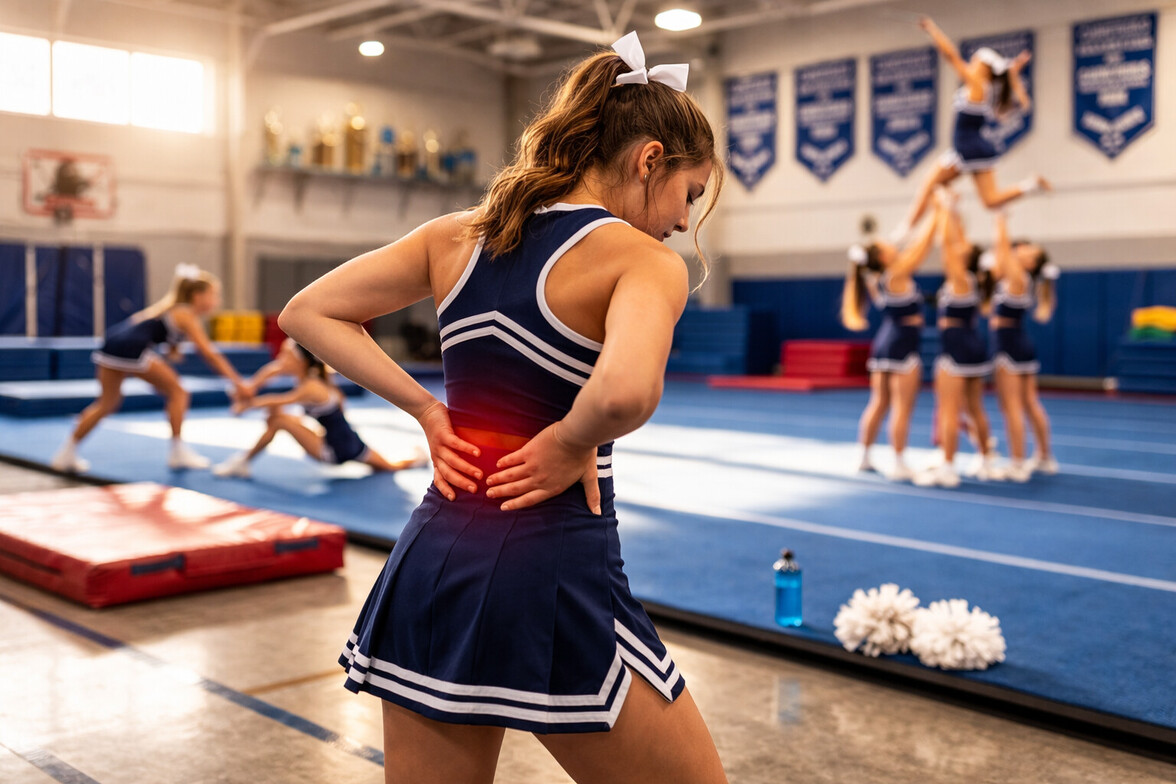
Cheerleading is one of the most physically demanding sports for young athletes. Between tumbling passes, high-impact landings, partner stunts, and back handsprings, the spine absorbs repeated stress. If you’re a cheerleader dealing with back or neck pain, or a parent looking for answers, a chiropractor in Olathe can help you understand what’s happening and how to reduce irritation safely. While this article focuses on cheer-related strain, more detailed information about specific conditions can be found on our pages for neck pain, low back pain, and upper-back-pain.
Cheerleading commonly irritates spinal joints and surrounding soft tissues because of repetitive extension, rotation, and compressive loading. When the spine is repeatedly forced into extreme positions without adequate recovery, joint motion can become restricted and surrounding muscles tighten to compensate.
In tumbling athletes, the lower back is frequently placed into hyperextension during back handsprings and layouts. Stunt bases often experience axial compression from supporting weight overhead. Flyers may develop neck or upper back irritation from repeated spotting and abrupt landings. Over time, this cumulative load can create joint stiffness, muscle guarding, and localized inflammation.
Common symptoms cheerleaders report include dull aching in the low back after practice, sharp pain when arching backward, tightness between the shoulder blades, neck stiffness after stunting, soreness that worsens with repeated tumbling, discomfort when sitting for long periods after practice, difficulty fully extending the spine, headaches after intense routines, one-sided back tightness, or pain that improves temporarily with rest but returns during activity.
In the office, I often see patterns where extension-based movements aggravate symptoms, while neutral spine positions provide relief. Some athletes tolerate standing well but struggle with prolonged sitting at school. Others feel fine during warm-up but tighten significantly after repetitive passes. It’s also common to see asymmetrical loading patterns from favoring one tumbling direction or one stunt position.
Frequently Asked Questions
Is cheerleading hard on the spine?
Yes. Tumbling, jumping, and stunting create repetitive compressive and extension forces that can irritate spinal joints and surrounding tissues over time.
Why does my back hurt more after practice than during?
Inflammatory irritation and muscle guarding often build gradually. Once adrenaline decreases and the body cools down, stiffness becomes more noticeable.
Can chiropractic care help young athletes?
Chiropractic focuses on restoring joint motion and reducing mechanical irritation. Many athletes use it to support recovery and improve movement efficiency.
Should a cheerleader stop practicing if their back hurts?
That depends on severity and persistence. Ongoing or worsening pain should be evaluated to determine whether activity modification is appropriate.
Why do I get headaches after tumbling?
Repeated extension and impact can strain the upper cervical and upper thoracic regions, which may contribute to tension-type headaches. You can read more about this on our headache page.
Cheerleaders train hard, and spinal stress is part of the sport — but persistent discomfort shouldn’t be ignored. Improving joint mobility, addressing muscular imbalances, and restoring proper movement patterns can make a significant difference in how an athlete feels during and after practice.
If you’re dealing with back or neck irritation from cheerleading, we can help. Call our Olathe chiropractic office at 913-735-6351 or click “Schedule Your Visit” to get started.
Ike Woodroof
Contact Me